



The Iranian Uprising
This is not AI. This is not Hollywood. This is the 2026 Iranian National Uprising. Charlatan follows tens of thousands of protestors, detainees, casualties, and the former crown prince in the latest “Shoot to Kill” showdown in the Islamic Republic of Iran.
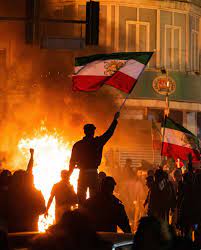
Image by Daniel Cohen @ dancohentv
Iran’s security forces cracked down on protesters this week, directly challenging U.S. President Donald Trump’s pledge to strike Iran if protesters are killed, a threat that’s taken on greater significance after the U.S. military raid that seized Venezuela’s Nicolás Maduro. “If Tehran violently kills peaceful protesters,” America will come to their rescue.”
Protests over crippling economic conditions broke out on December 28, 2025 at the Aladdin Shopping Centre in Tehran. Retailers closed their shops in protest after the Iranian rial plunged to 1.42 million against the U.S. dollar—a new record collapse that compounded already catastrophic inflation and pushed food prices beyond reach for ordinary Iranians.
Over the past several weeks, protests have spread to more than 100 cities across Iran’s geographic footprint of 85 million people. There are 2000 - 20,000 estimated casualties, thousands of detentions, and hundreds of thousands of protestors have triggered the largest internet black out in Iran’s history. “Death to the dictator; Death to the Islamic Republic; This is the last battle; Pahlavi will return!”
The deposed Reza Pahlavi, Crown Prince of Iran is calling Iranians to protest and topple Iran’s government. But do Iranians really want another king? He implores the nation on X:
Great nation of Iran, the eyes of the world are upon you. Take to the streets and, as a united front, shout your demands. I warn the Islamic Republic, its leader, and the IRGC that the world is closely watching you. Suppression of the people will not go unanswered.
Pahlavi calls for European leaders to join the US in promising to hold the regime to account. Trump doubled down on Friday: “You better not start shooting because we’ll start shooting, too.” There would be no U.S. boots on the ground, Trump said, but “if they start killing people like they have in the past, we’ll be hitting them very hard where it hurts.”
Iran’s supreme leader, Ayatollah Ali Khamenei in a televised address responds on Friday. “The Islamic Republic will not back down in the face of vandals. Trump should know that world tyrants were brought down at the peak of their arrogance. He, too, will be brought down.”
However, the United States has ostensibly entered the Age of Absolutism: a day and time when rulers with immense power, free from legislative oversight and international law govern as Trump declared this week by the divine right of “My Own Morality.” And the best among them rule without ever firing a shot.
Trump demurred when asked if he’d meet with the Crown Prince. “I’m not sure that it would be appropriate at this point to do that as president,” Trump said. “I think that we should let everybody go out there, and we see who emerges. To the victor the spoils.” Omitting, tactically, that the deposed prince speaks only in the ether, and hasn't a network of support or ground game in Iran.

The Shah of Iran, Mohammad Reza Pahlavi in 1977
Reza Pahlavi was only 16 years old when Iran’s 1979 revolution toppled his father’s forty-year rule. The eldest son of Shah Mohammad Reza Pahlavi, he was the first in the line to inherit the oil-rich thousand-year-old empire. At 65, nearly half a century after the unravelling of his birthright, his wait may finally be coming to an end.
It is unclear what might be driving the renewed excitement for the royal family, and its titular head in exile, analysts say. Do Iranians genuinely support the restoration of the monarchy, or are they just fed up with their repressive theocracy?
Most recently, on Tuesday, June 17, 2025, the exiled crown prince issued a video statement declaring that the Islamic Republic "has reached its end and is in the process of collapsing," asserting that Supreme Leader Ali Khamenei had "gone into hiding underground and has lost control of the situation" —a theatrical assessment delivered amid Israeli military operations against Iran's nuclear infrastructure.
Speaking in an interview with Sean Hannity aired Thursday night on Fox News, Trump went as far as to suggest 86-year-old Supreme Leader Ayatollah Ali Khamenei may be looking to leave Iran. “He’s looking to go someplace,” Trump said. “It’s getting very bad.” The performance contained all the elements of monarchical restoration theater. He hands the momentum to Pahlavi who continues on X, "My Fellow Countrymen:"
The Islamic Republic has reached its end and is in the process of collapsing. Khamenei, like a frightened rat, has gone into hiding underground and has lost control of the situation. What has begun is irreversible. The future is bright, and together, we will pass through this sharp turn in history.
The video garnered over 5.8 million views, though whether this constitutes genuine revolutionary momentum or merely digital spectacle is less clear.
Yet here emerges the central paradox of Pahlavi's position: He has consistently stated he would not run for political office if the regime fell and would leave restoration of the throne to the Iranian people's decision—a rhetorical hedge that allows him to simultaneously position himself as both potential leader and democratic facilitator.
The predictions themselves have evolved. In February 2023, Pahlavi told The Daily Telegraph that the Islamic Republic was more likely to fall "in the near future than it had been in previous decades," noting that Iranian reformists had abandoned attempts to change the system in favor of complete overthrow. He framed the greatest challenge for a post-clerical Iran as controlling the military and achieving justice against regime officials—a prescient concern given the operational complexities any transition would entail.
More structurally, Pahlavi established the National Council of Iran in Paris in 2013, which functions as a government-in-exile explicitly designed to reclaim the former throne following potential overthrow of the Islamic Republic. By 2019, he launched the Phoenix Project of Iran, attempting to unify disparate opposition factions around a common vision for post-clerical governance.
The historical context illuminates the dynastic claim's precarious foundation: Following his father Mohammad Reza Pahlavi's death in Cairo on July 27, 1980, Reza Pahlavi declared himself shah on his 20th birthday, October 31, styling himself "Reza Shah II"—a gesture that drew immediate disassociation from the U.S. State Department, establishing the pattern of exile politics that would define subsequent decades.
What remains uncertain is whether Pahlavi's predictions constitute genuine intelligence assessment, or aspirational messaging designed to accelerate regime fragility through the perception of inevitable collapse. The timing—synchronized with Israeli military operations and regional instability—suggests strategic coordination rather than spontaneous prophecy. Whether this theater of restoration culminates in actual power transfer, or merely another chapter in Iran's long history of exiled monarchs, is contingent solely on a dynamic of Absolutism and an American kingmaker.
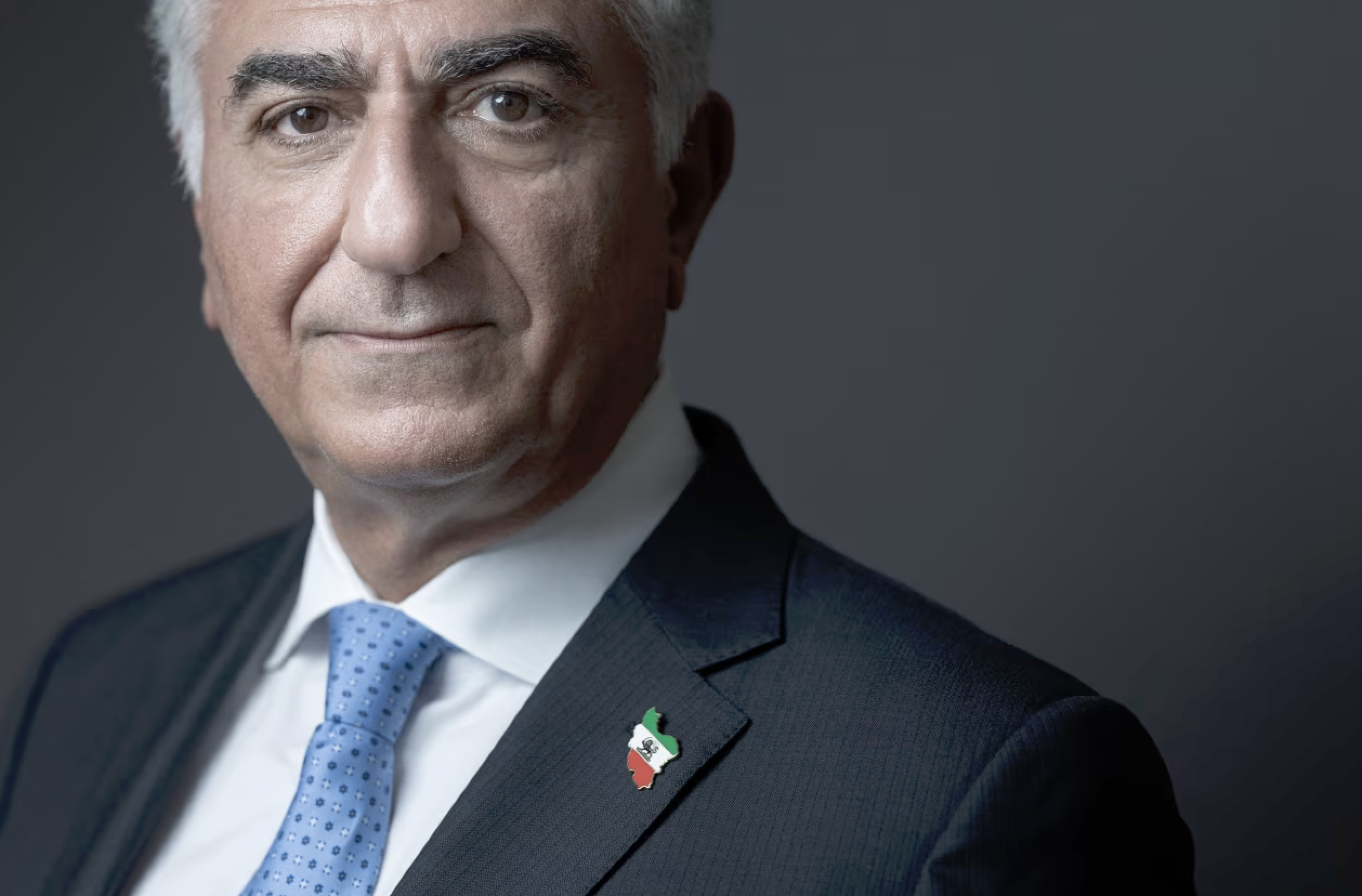
Reza Pahlavi, Crown Prince of Iran in 2025
What is emerging is something more surgical and strategically devastating: a multi-vector pressure campaign designed to accelerate internal collapse while maintaining deniability about direct regime change objectives. Trump signed a National Security Presidential Memorandum in early February 2025 restoring "maximum pressure" on Iran. A 2025 National Security Presidential Memorandum (NSPM-2), denied the acquisition of nuclear weapons and intercontinental ballistic missiles (ICBMs). Moreover, the United States has tried to stop Iran's oil exports through a campaign of sanctions, maritime seizures, and targeting "shadow fleet" tankers, particularly aiming for zero exports to choke off regime funding. Despite these efforts, Iran has continued to export oil, primarily to China. Thus, the architecture of the protests operate through the lens of financial dealmaking rather than military occupation.
Iran's rial collapsed to 1.46 million per dollar in early January 2026, down from approximately 70 rials per dollar before the 1979 revolution, and 32,000 during the 2015 nuclear deal. This isn't economic warfare in abstract. It’s the manifestation of hyperinflation rendering life savings worthless, food prices beyond reach, and the material dissolution of social contract between state and citizen.
The military dimension exists not as invasion but psychological calibration. Following June 2025's "Operation Midnight Hammer," U.S. strikes on three Iranian nuclear facilities which Trump claimed "obliterated" their program came with a threat from Republican lawmakers that Trump would "bomb the hell out of them" if uranium enrichment resumes in Iran.
Yet here surfaces the central paradox: Iran possesses one million active and reserve soldiers, with the IRGC commanding 150,000 battle-hardened troops. The Basij militia adds hundreds of thousands more, and mountainous terrain and vast urban areas make invasion incomparably more complex than Iraq or Venezuela. Direct American military conquest is operationally prohibitive, which is precisely why Trump's strategy calls for stirring regime change from within.
Trump's otherwise gallant mission to intervene on the side of Iranian protestors operates as psychological warfare. Take Venezuela. Last Saturday's charade in Caracas succeeded only because Venezuela had become an empty shell state, and was turning internally toward democratic reform. Trump can isolate and remove individual leaders from hollowed regimes, but what Trump cannot transform or control are countries like Iran that operate from a complex theological playbook. No holy war has ever fundamentally been won.
What emerges is strategy of managed collapse: economic strangulation through sanctions enforcement; military strikes calibrated to degrade capabilities without triggering full war; rhetorical support for protesters to energize opposition while maintaining deniability; and cultivation of exiled alternatives without formal endorsement. Trump stated in May 2025 that "I think we're getting close to maybe doing a deal" on Iran's nuclear program, while simultaneously noting "we don't have a lot of time to wait.” Keeping diplomatic off-ramps available while tightening the vise is key.
The objective isn't American governance of Iran, but rather Iran’s political reconstruction enabling American influence in the Middle East. Whether this produces a military junta, secular republic, warlord democratic transition, sectarian fragmentation, or a Pahlavi restoration is irrelevant. What Trump wants is the containment of Iran; to end the Israeli-Palestinian conflict; normalize relations in the region; leverage economic ties, secure multi-trillion dollar investment commitments from Gulf partners. And what Trump wants as of late—Trump 'absolutely' gets.


Make sense of the week's news. Charlatan reviews the worldview.

Make sense of the week's news. Charlatan reviews the worldview.


Archives