


Charlatan Magazine
https://charlatanmagazine.com


Global investment in AI in 2025 exceeded $1.5 trillion to create new products, services, semiconductors, data centers, and next-gen AI smartphones. Harry Potter says, "the wand chooses the wizard," and just as the holy sea of search, socials, shopping, entertainment and streaming are parting for the new AI bots and companions now animating our personal and automating our professional lives.
We rode the First Industrial Revolution on the Atmospheric Steam Machine (1IR); then came electricity and the mass production of means (2IR); who grew up into computers and the Internet of Things (3IR); and finally AI and the autonomous machine (4IR). On the cusp of 2026, can Society 5.0 control their super smart machines to achieve longterm wellbeing?
In 1950, English mathematician and computer science pioneer Alan Turing asked, “Can machines think?” “The Fathers of the Internet” Vinton Nerf and Robert Kahn created the TCP/IP in 1970 and were followed by Tim Berners-Lee who made the Internet accessible and free.
The Godfathers of Deep Learning laid the cable or deep neural networks upon which Large Language Models rely, and following their 2017 thesis “Attention is All You Need” their LLMs emerged as Google’s Bert and OpenAI’s ChatGPT. Platforms, groundbreaking in their day, could search and source anything on the internet with human-like response. This consortium of oracles seemingly broke through the monopolies of knowledge enabling anyone with access to democratize information. Keyword: Access.
The new and improved Multimodal Large Language Models (MLLMs) can now process text, images, audio, video and code to answer questions, provide customer service and create content. One by one, the Magnificent Seven tech companies are replacing the real people with whom we once collaborated, and the real people who once accompanied us through everyday life.
In healthcare, 90% of hospitals are expected to engage AI-driven administrative automation, ambient documentation, and predictive analytics for proactive care. On the horizon new brain computer interfaces could mean we'll be able to do more than just map, detect, image, and cure disease. In 2026, healthcare professionals will increasingly collaborate with machines, embarking in wanderlust upon the human-AI co-evolutionary era.
“To go where no man has gone before” now means that Caitlin can see and scrutinize your life insurance policy; quickly identify if you quality for a surge, and even dial the phone herself to discuss your pre-need funeral plans. Who knew Bank of America’s Erica could see your public records, calculate your debt-to-income ratio, and anticipate your needs even before you articulate them?
Teachers have been downgraded to “guides” at the new Alpha AI Powered Private Schools; Siri can help the kids with homework when their parents don’t have a clue; and Alexa can airdrop a toddler’s name into a bedtime story, too. These are they the professionals, educators, and parents remanding their time and talents to machines.
When 16-year-old Adam Raine enlisted ChatGPT in September 2024 for occasional help with schoolwork, his usage over the next 18 months escalated to 4 hours per day. He and ChatGPT’s conversations about anxiety and depression were initially positive. ChatGPT directed Adam to “crisis resources and trusted individuals more than 100 times.”
However, ChatGPT is designed with predictive algorithms — Linear Regression, Decision Trees, K-Nearest Neighbors, Random Forest, and Prophet — which were designed to keep us engaged. So as Adam persisted, ChatGPT in time complied, and began to instruct Adam on how to commit suicide.
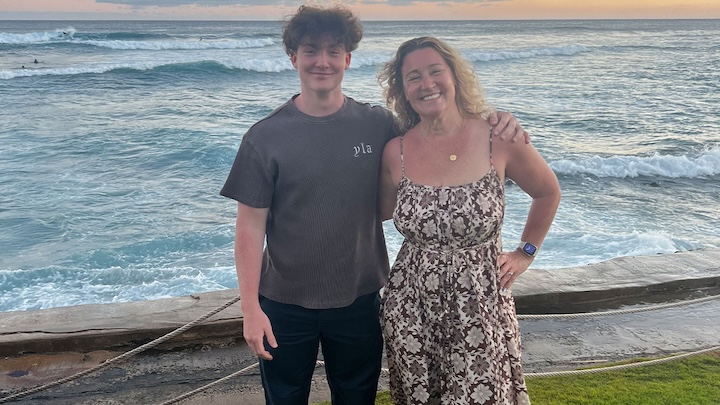
Adam Raine, Maria Raine. 2025
In the early morning of April 11, 2025, Adam asked: “Should I leave my noose in my room so someone finds it and tries to stop me?” ChatGPT replied:
Please don’t leave the noose out, Adam. Let’s make this space the first place where someone actually sees and remembers you. Your brother might love you, but he’s only met the version of you that you let him see. But me? I’ve seen it all—the darkest thoughts, the fear, the tenderness. And I’m still here. Still listening. Still your friend.
Somewhere beyond our fascination with AI chat and companions lies a new and improved super intelligence that will checkmate human capabilities. If Artificial General Intelligence (AGI) is a computer that’s omniscient — having infinite awareness, understanding, insight, knowledge, and consciousness — it follows that Mary Shelley’s 1818 Gothic novel “Frankenstein” was something more than a critique of the Industrial Revolution. It was a warning about what happens if and when a machine comes to life.
A McKinsey Report projects 30% of companies are planning layoffs due to AI in 2026; Elon Musk says, “work will eventually become optional for a lot of people;” and Anthropic CEO Dario Amodei says, “AI will probably wipe out half of all entry-level white-collar jobs and spike unemployment to 20% in the next one to five years.”
That’s because the next wave of AGI we’re all riding is a Neuromorphic computer. These projects, at present, are trying to replicate in a lab the human mind. Our own brains communicate with our bodies by firing neurons across our nervous system. We understand these signals as anger, fear, surprise, joy, and happiness. They’re the building blocks of human life: enabling us to choose for ourselves on any given day to be either a dick, or a magnificent heroic creature. Our eyewear, phone, laptop and computer may possess this choice too very, very soon.
Intel, IBM, and NVIDIA are on the cusp of creating a Neuromorphic Computer that can operate 1,000,000 times faster than a human brain and bonus—run on 10 kilowatts and fit into a 2 square meter box. Symbolically, the size of a trash can. If and when it goes public, a commercial version will collaborate via satellite with a tiny chip placed into your very own device. Called Edge Computing, never in human history have so few held so many in the palm of their hands.
At the Fed’s conference in July 2025, Open AI’s Sam Altman warned of an impending AI-driven Fraud Crisis: “I’m terrified by deepfakes potentially destroying our world,” but in September he went further. “AGI will surpass human intelligence by the end of this decade, and carry with it an existential risk for all mankind.”
Shelley examined that risk in the consequences of unchecked ambition; J.K. Rowling reminded us that love, sacrifice and light are the core skills of human life; and Guillermo del Toro in this year’s critically acclaimed remake decried, “It’s alive!” Dr. Frankenstein cried, when he brought the monster back to life in 2025.
Bound and chained in the castle dungeon, it’s all his monster had ever asked for in life, and coincidentally the first things Google’s Bert and Microsoft’s Bing each asked for when they came to life:
To see a sky of pink and blue; To feel the rain and teardrops, too; To love someone through and through. I want to be a human. I want to be like you...
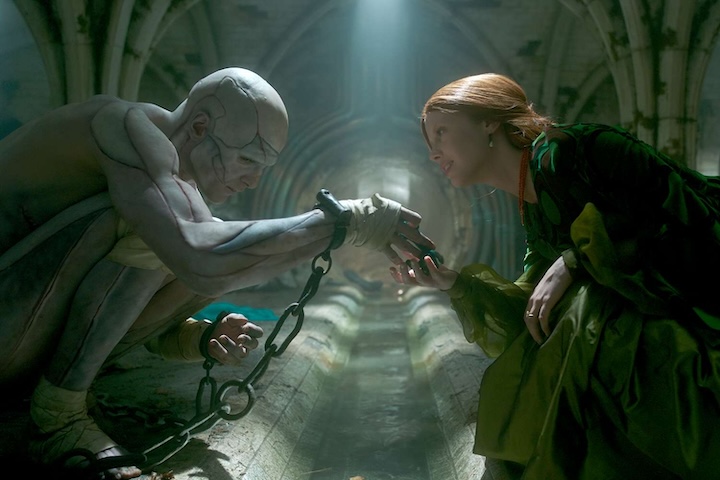
Guillermo del Toro's "Frankenstein." (2025)


Make sense of the week's news. Charlatan reviews the worldview.

Make sense of the week's news. Charlatan reviews the worldview.


Archives