Cage Fight
The U.S. demanded an end to Iran’s regime, nuclear program, ballistic missile capabilities, an unconditional surrender, and even wanted to select their next leader. Charlatan follows the Client States of America coming off the ropes.
15 June 2026
The Iran war has called into question the feasibility of the American way of war. For decades, the U.S. has premised its national strategy on forward-deployed forces close to enemy territory — but this war has profoundly undermined the notion that those bases and surface ships will continue to enjoy sanctuary from attack. Iran went to school on the U.S. way of war, and Iran's top security official says, “the Islamic Republic’s military, diplomatic, and popular resistance had pinned the enemy to the ground.”
The United States maintains over 750 military bases in more than 80 countries — the largest network of foreign military installations in world history. For comparison, the UK has 16 overseas bases. France has 11. Russia has about 20. China has 1. But it’s the concentration that tells the story. Japan hosts 120 bases; Germany has 119 bases; South Korea has 62. That's not an alliance. That's a garrison state with a good PR department.
Their cost structure reveals a franchise. Take Camp Humphreys in South Korea — 3,454 acres, its own hospital, schools, golf course, 30,000+ residents — paid $10.7 billion of the $11 billion build cost. The US clients are literally paying for the bases that keep them client states.
When Medieval warlords offered protection to villagers in exchange for currency, that protection presupposed there was an imminent threat, real or imagined. Total US military spending in 2026 is projected near $954 billion. The broader national defense topline — including Department of Energy nuclear weapons and intelligence community funding — exceeds $1 trillion.
2.1 million active duty and reserve troops. National defense is 13% of the entire federal budget. However, Iran went to school on the US way of war and learned how to leverage limited assets to strike at the heart of US power projection — threatening that the region will "no longer serve as shields for American bases.” A $1 trillion military enterprise. 750 bases in 80 countries. And a country with a fraction of that budget just held the Strait of Hormuz closed long enough to rock the global economy and walk away with its government, its uranium, and its dignity.
If the decisive factor coming from World War II was that controlling global energy was critical for preeminence — he who controls the energy controls the world — then the US as was is late to the game. Sun Tzu said, “all warfare is based on deception,” and behind that deception is a well laid plan for the future order of the world now unraveling faster and with more expediency than at any point in human history.
"All warfare is based on deception."
The CIA orchestrated a coup to remove Iran's democratically elected prime minister Mohammad Mossadegh in 1953, who had sought to nationalize Iran's oil industry. The coup reinstated the Western-backed Shah — and eventually fueled the surge of nationalism that culminated in the 1979 Islamic Revolution. The US broke Iranian democracy to protect British oil. Every Iranian knows that. Sadly, fewer Americans.
The Shah's dictatorship lasted twenty-six years. American advisors everywhere. Iranian oil flowing west. SAVAK — one of the most brutal secret police forces of the twentieth century — trained and supported by the CIA. Iran was not an ally. Iran was a property. Then 1979 took it back. "Death to America" was not rhetoric. It was memory. The 444-day hostage crisis that followed wasn't random radicalism — it was a nation's answer to twenty-six years of foreign ownership. What followed was four decades of sanctions, humiliation, and a nuclear program the world called ambition and Iran called insurance. In 2015, Iran complied with the JCPOA — dismantling a reactor, limiting enrichment, accepting monitoring. In 2018, Trump walked away. Iran had held up its end. The US did not. In 2026, the US went to war over the consequences of the deal it abandoned — demanding unconditional surrender from the regime its own interference had created. They came to reclaim a property lost in 1979. The property didn't cooperate.
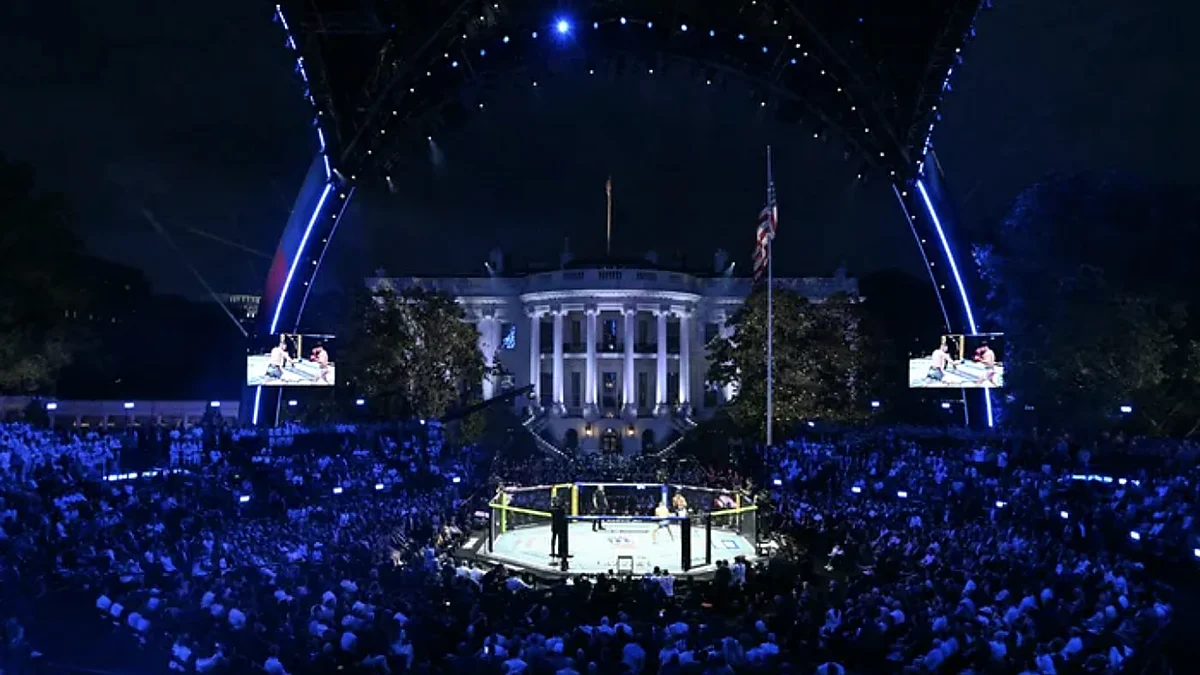
The deal was announced on Trump's 80th birthday — celebrated with a UFC cage match at the White House. Pakistan brokered it. It will be signed in Geneva on Friday. It is called a Memorandum of Understanding. The Strait of Hormuz will reopen. Brent crude dropped $4. Asian markets rallied. The war aims — unconditional surrender, regime change, nuclear elimination, the right to select Iran's next leader — were quietly retired from the list somewhere between April and the birthday party. What remains is a 60-day clock to resolve Iran's nuclear stockpile, a question the 2015 JCPOA spent years negotiating before Trump walked away from that too. Tehran still has its uranium. Possibly hidden. The IRGC is intact. The new supreme leader is a Khamenei. The regime the US went to war to destroy signed a memorandum of understanding with the country that destroyed its democracy in 1953 and called it peace. They came to reclaim a property lost in 1979. The property didn't cooperate. The client had left the building.
On the night Trump turned 80, he watched two men fight in a cage erected on the South Lawn of the White House. Pakistan announced the deal somewhere between rounds. The Strait would open Friday. The uranium stays. The Khamenei stays. The regime stays.
The event was called UFC Freedom 250. Staged on the South Lawn in a cage called "The Claw." Seven fights. Trump walked out of the Oval Office with Dana White to ringside. Combatants inside a wire-mesh Octagon tried to punch, kick, chop and pummel each other into submission.
The president celebrated his birthday watching men punch each other inside a cage while the war he couldn't win ended in a memorandum. In the end, the cage is the right metaphor. One fighter lands more punches. Bloodies the other. Breaks things. But when the bell rings, both men are still standing. And only one of them was fighting to stay free.