CHARLATAN
The Exposé of Politics & Style
I have been in rooms where the music stopped.
In 2008, I was Director of Investments Technology at Evergreen Investments — one of the top twenty-five largest mutual fund families in the United States, 83 funds, nearly $250 billion in assets under management, 2.7 million shareholders. Founded in 1932. A Wachovia company. We thought we were solid. We were wrong. Over a weekend in September, regulators arranged a shotgun wedding and put Wachovia to sleep. No runway. No warning. Just a phone call, a handshake, and a check from Wells Fargo for a fraction of what we were worth.
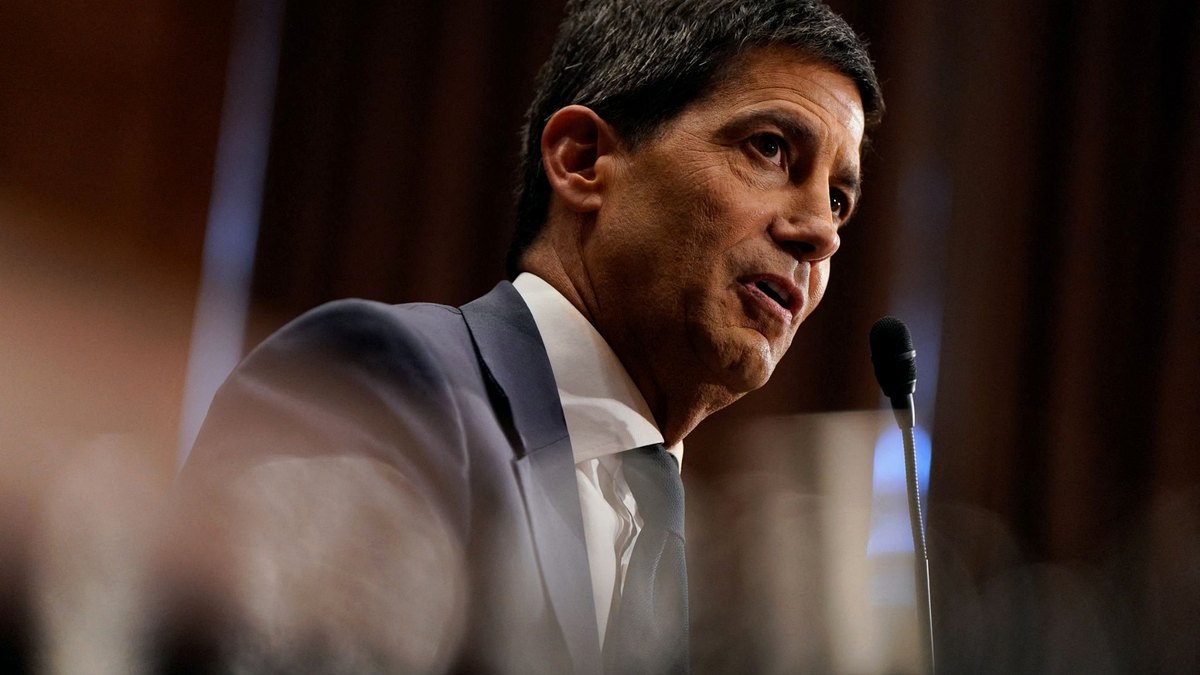
I tell you this not to relitigate the past but because the past is relevant right now. Jerome Powell cleaned out his desk on Friday. Kevin Warsh walked in. And the market that spent six months pricing in rate cuts woke up Friday morning to a 10-year Treasury yield spiking to 4.55% — a one-year high — with a 45% probability of a rate hike priced into futures, two ugly inflation prints on the desk, and an Iran war that nobody in Beijing managed to solve this week.
This is the room. I know what it smells like.
When I interviewed Barney Frank in 2009 — a year after the crisis, in his sparse government office in New Bedford with the telephones droning in the background — he told me something that has stayed with me. Alan Greenspan's great failure, Frank said, wasn't the low interest rates. It was that Greenspan had the authority to regulate subprime mortgages, handed to him by Congress in 1994, and he simply refused to use it. He had the tool. He chose not to pick it up. "His view was the only tool he had was to raise interest rates," Frank told me. "I disagree with that."
That's what I think about when I think about Kevin Warsh.
Warsh was on the Fed Board of Governors during the 2008 crisis. He was in the room when Bernanke navigated Lehman, AIG, TARP, the whole catastrophe. He knows the history. He has credentials. Nobody is questioning his intelligence or his preparation. What people are questioning — what I am questioning — is something simpler and more fundamental.
Donald Trump nominated Warsh. Trump wanted him in 2017 and chose Powell instead. He has waited eight years for this. Trump needs cheaper money right now. The Iran war has driven gasoline prices up 21% in a single month. CPI came in at 3.3% year over year in March, accelerating from 2.4% in February. The trade war has been inflating consumer prices for seven years. The midterms are eighteen months away. A rate cut is the single most effective economic stimulus available to this president that doesn't require an act of Congress.
The pressure on Warsh to deliver that cut will be the most intense any Fed chair has faced in fifty years.
I don't say that lightly. Arthur Burns bent to Richard Nixon in the early 1970s and prioritized the president's political needs over price stability. Inflation ran to 12%. It took Paul Volcker — who hiked rates to 20% and triggered a recession brutal enough to cost Jimmy Carter the presidency — to break it. Burns knew better. He chose differently. The textbooks are not kind to him.
Powell knew this history too. He raised rates when Trump demanded cuts. He was called an "enemy" by the sitting president of the United States. He kept raising. He did his job.
Now he's gone. And the question for Warsh is whether he does the same thing when the call comes — because the call will come.
Here is what the numbers say right now. Inflation is re-accelerating. The 10-year Treasury yield hit 4.55% on Friday morning — the highest in a year — as markets processed the reality that Trump left Beijing without an Iran deal, which means oil prices stay volatile, which means energy inflation stays sticky, which means the Fed has no room to cut. The market had priced in resolution. The resolution didn't arrive. Someone has to absorb that disappointment and it won't be the people who flew to Beijing on Air Force One.
It will be the consumer. It always is.
I spent thirty years watching where the money goes. At Evergreen Investments, I watched $250 billion in assets get managed on behalf of 2.7 million ordinary shareholders — teachers, nurses, retirees, small business owners — people who had done what they were told to do. Save. Invest. Trust the system. And then the system failed them anyway because the people running it — the regulators, the executives, the politicians — had prioritized something other than their interests.
I later went to PRIM, the Massachusetts pension fund, where I oversaw the state pension clear $100 billion for the first time, managing nearly $11 billion on behalf of Massachusetts pensioners. I know what it means when the Fed gets it wrong. It isn't abstract. It's a retired firefighter in Worcester whose pension doesn't stretch as far as it used to. It's a teacher in Springfield whose cost of living keeps going up while her savings rate stays flat.
The Federal Reserve exists to serve those people. Not the president. Not the market. Not the men who flew to Beijing this week to carve up the global economy between them.
Warsh knows this. The question is whether knowing it is enough.
When I met John Hofmeister in Charlotte in 2010 — the Shell Oil president turned energy reformer — I went in skeptical and came out persuaded. Not because he told me what I wanted to hear but because he was honest about what he knew and honest about what he didn't. He said the Green Movement was built on soundbites. He said energy independence was a joke. He said Congress had failed the American people on energy for forty years across both parties. And then he proposed something practical and got ignored.
That's what happens to honest people in Washington. They tell the truth and then someone more powerful decides the truth is inconvenient.
Kevin Warsh walks into the Federal Reserve on Monday morning with a decision already forming on his desk. The data says hold. The politics say cut. The president who appointed him says cut. The people who voted for that president — the ones paying more for groceries, more for gas, more for their mortgage — need someone in that building who is thinking about them first.
I'll be watching to see which room Kevin Warsh is actually in.

All the World’s a Stage
Make sense of the week's news.
Charlatan reviews the worldview.
CHARLATAN
The Exposé of Politics & Style