CHARLATAN
The Exposé of Politics & Style
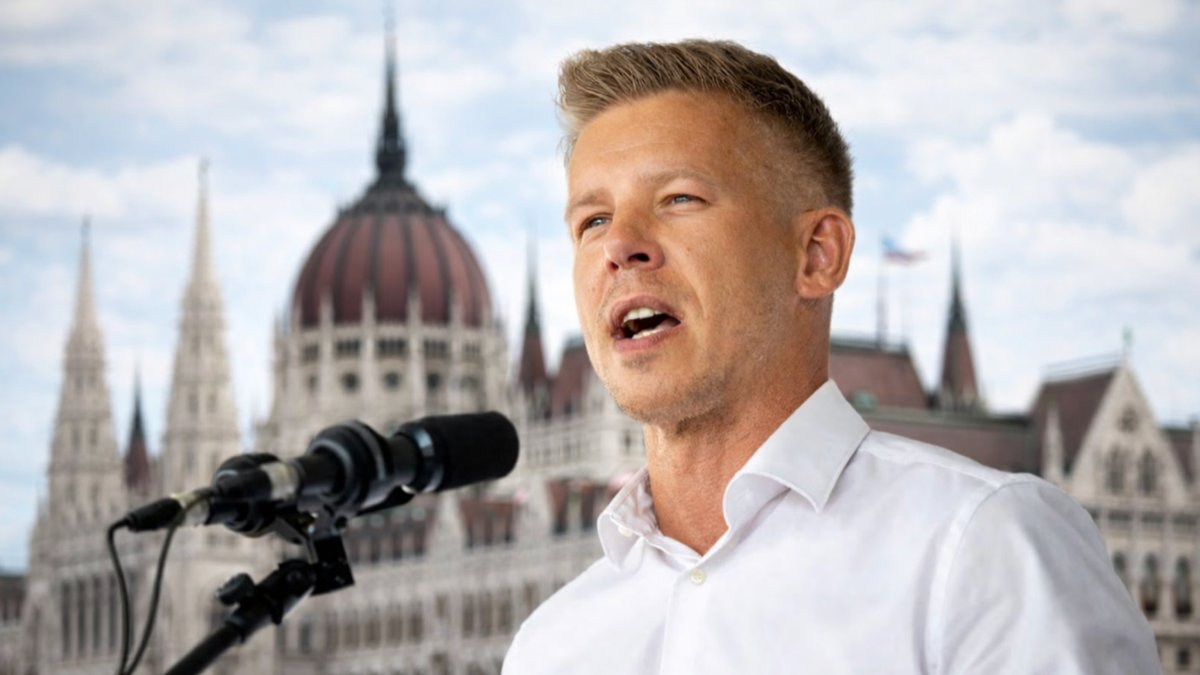
As a boy, he kept a poster of Viktor Orbán on his bedroom wall and spent his formative years inside the machine: joining Fidesz at university; marrying Orbán's future justice minister; working the foreign ministry in Brussels; and running the state student loan center. Twenty years of ideological apprenticeship inside the palace of an idol he worshiped. Now Peter Magyar is Hungary's prime minister, and the European Union, all 27 fractious members of it, are watching to see what a true believer looks like when the faith finally breaks.
There is a particular kind of wound that forms when the person you most admire turns out to be exactly what they promised to destroy. It is not simple disillusionment. It is closer to what psychologists call a rupture of idealized identification — the moment the father figure is revealed as merely a man, and a corrupt one at that. Most people who experience this wound go quiet. They absorb it, rationalize it, find ways to keep the poster on the wall even after they've stopped believing in what it represents. Peter Magyar did not go quietly.
In February 2024, Hungary's president Katalin Novák pardoned a former official convicted of covering up the sexual abuse of boys at a state children's home. The scandal, grotesque on its own terms, became a political catastrophe for Magyar when his then-wife, Justice Minister Judit Varga, countersigned the pardon. His family and the regime collapsed in the same moment. Magyar went viral.
In a livestreamed interview that would be viewed millions of times, Magyar revealed what two decades inside the Orbán machine had taught him. He accused “Viktator” and his inner circle of using family values and national sovereignty as "sugar-coating," a careful veneer over the raw business of power and money. It wasn’t a statement of a man who had drifted from his convictions. It was the statement of a man who had been betrayed by his own.
Viktor Orbán understood something about the Hungarian psyche that most Western analysts consistently underestimate. Hungary carries a long memory of being managed, partitioned, and condescended to — by the Ottomans, the Habsburgs, the Soviets, and Brussels. Orbán turned that memory into a political instrument of extraordinary precision. His "Illiberal Democracy," as he himself named it in a 2014 speech, was not an accident or an ideological drift. It was a deliberate architecture, built on the premise that Hungarian sovereignty was perpetually under siege and that only one man had the clarity to defend it.
For sixteen years, it worked. The gerrymandered electoral map, the captured media landscape, the constitutional rewrites — all of it was constructed to be self-reinforcing. The system was designed to make Orbán unbeatable, and for four consecutive elections, it succeeded. What the architecture could not account for was a challenger who had lived inside it. Magyar didn't campaign against Orbán's system from the outside. He named its mechanisms from memory. He knew which doors were false because he had stood behind them.
By the time Magyar organized his final rally on March 15, 2026 — the national holiday commemorating Hungary's 1848 revolution — he had held twelve major public demonstrations in two years; walked on foot from Budapest to the Romanian border as a symbolic act of national unity; and built a party that consolidated nearly every fragment of the fractured opposition behind a single banner. Tisza's platform was not complicated: Hungary chooses Europe. The economy over ideology. Checks and balances restored. It was, in the most precise sense, a counter-diagnosis. Where Orbán had told Hungarians they were perpetually under threat, Magyar reassured Hungarians they were capable of governing themselves.
On April 12, 2026, more than 79 percent of eligible Hungarian voters turned out — the highest participation since the fall of communism. Magyar's Tisza party won 138 of 199 parliamentary seats. A supermajority. Orbán conceded in under three hours.
The concession had barely registered when Senate Minority Leader Chuck Schumer posted on X: "Pay attention, Donald Trump. Wannabe dictators wear out their welcome. November 2026 can't come soon enough."
"Wannabe dictators wear out their welcome."
The White House said nothing. Days earlier, Trump had sent Vice President JD Vance to Budapest to campaign alongside Orbán and pledged "the full economic might of the United States to strengthen Hungary's economy if Orbán prevailed.” Orbán did not prevail. Washington did not comment.
Across the Atlantic, Polish Prime Minister Donald Tusk posted on X: "Hungary, Poland, Europe. Back together! Glorious victory, dear friends!" — then added "Ruszkik haza," meaning "Russians, go home.” In Moscow, Kremlin spokesman Dmitry Peskov replied: "Hungary has made its choice."
The European Union's relationship with Hungary under Orbán was a prolonged study in institutional impotence. Brussels had the diagnosis — democratic backsliding, rule of law violations, systematic erosion of judicial independence — and lacked the mechanism to act on it decisively. Article 7 proceedings, the EU's theoretical nuclear option for member state misconduct, moved at the speed of consensus, which is to say it barely moved at all. Meanwhile, the EU froze approximately €18 billion in cohesion funds, a figure representing roughly ten percent of Hungary's annual economic output, which deepened Hungarian economic pain without meaningfully altering Orbán's political calculus.
What the EU could not do by procedure, a Hungarian lawyer with a poster on his childhood wall did in two years.
The stakes now are larger than the former Austro-Hungarian Empire. Magyar's victory arrives at a moment when liberal democracy in Europe has been running a deficit of proof. The Polish precedent — where Law and Justice lost power in 2023 — offered one data point. Hungary, with its far more entrenched system and its direct alignment with Moscow, offers something stronger: evidence that even a rigged playing field can be overcome when the opposition is unified, disciplined, and running on genuine public fury rather than factional interest. Magyar has pledged to reduce Hungary's dependence on Russian energy by 2035; to rebuild NATO and EU relationships; and to restore the constitutional checks that Orbán spent sixteen years dismantling. The €18 billion, frozen since 2022, is expected to begin flowing again.
European Commission President Ursula von der Leyen said simply: "Europe's heart is beating stronger in Hungary tonight." Europe has been waiting, without quite admitting it, for someone to demonstrate that the post-2016 authoritarian drift was not a one-way door. That the institutions built after 1945 still had sufficient immune response to reject what was being done to them from within. Magyar's margin — not a narrow win, not a coalition negotiation, but a supermajority achieved on 79 percent turnout — is the most unambiguous verdict European democracy has produced in a decade.
In 1989, young Orbán stood in a Budapest square and demanded Soviet troops leave Hungary; he advocated for democratic reforms, a market economy, and the establishment of a civil society, serving as a prominent liberal dissident. Orbán believed in democracy with the clean conviction of someone who'd never held power. He didn’t fall to his enemies. He bowed to his most faithful student, who’s determined to restore Hungary’s liberal, anti-communist, pro-European and intrinsically Hungarian ideals.
Peter Magyar was sworn in as prime minister yesterday — 9 May 2026. He is 45 years old. He is a single father to three children—all of whom now have a poster of their dad on their walls.

All the World’s a Stage
Make sense of the week's news.
Charlatan reviews the worldview.
CHARLATAN
The Exposé of Politics & Style